Thursday, October 1, 2026


®
The World's Local News Source®

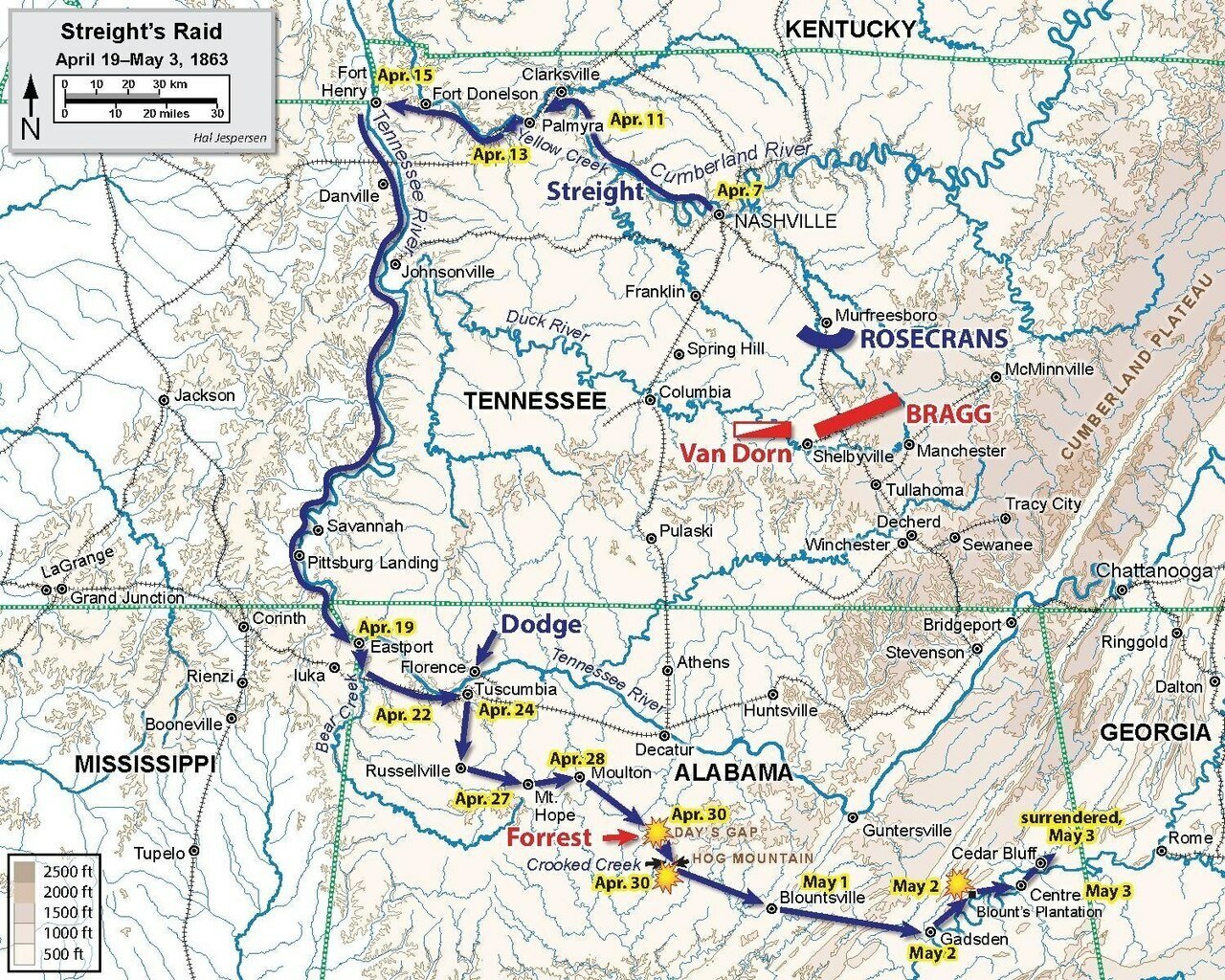
As the sun rose on the morning of May 3, 1863, Union Col. Abel Streight and approximately 1,500 of his mounted infantry—many astride mules—crossed the Chattooga River on Dykes’ Bridge at Cedar Bluff, Alabama, just a few miles from the Georgia border.
For nearly a week, Confederate Gen. Nathan Bedford Forrest had doggedly pursued Streight’s column, beginning on April 28 near Tuscumbia, Alabama. The Federals were driving eastward across the entire state under orders to destroy key military depots and railroad connections in and around Rome, Georgia. Along the way, the two forces clashed fiercely at Day's Gap and Hog Mountain on April 30, and again at Battle Royal on May 1. By the following day, Streight’s men had reached Gadsden. That same day, 16-year-old Emma Sansom famously aided Forrest in crossing Black Creek, forcing Streight to flee the town in haste.
As dusk fell on May 2, Forrest again caught up with Streight near Turkeytown, at Blount’s Plantation, where the Federals suffered the loss of Streight’s trusted subordinate, Col. Gilbert Hathaway. That night, while Forrest allowed his exhausted men to rest, Streight pressed on, driving his fatigued troopers and their failing mounts toward Rome. Of the condition that day, Streight later reported, “Large numbers of the mules were continually giving out … many of them had such sore backs and tender feet it was impossible to ride them.”
The bedraggled, dust-covered Midwestern soldiers were near collapse but still ready to fight as they made their way across the Chattooga River—only hours from their intended goal of Rome. After crossing Dykes’ Bridge, they set it ablaze and halted to rest at the Lawrence Farm east of present-day Cedar Bluff late on the morning of May 3.
Meanwhile, Forrest and his 400 cavalrymen also reached the destroyed bridge. They stripped down, ferried ammunition by hand, and hauled their cannon across the muddy river bottom using ropes—a testament to their determination and grit.
As the Confederates closed in, Streight recognized that his hope for a surprise attack was gone. The town had been warned and stood ready to defend itself. Realizing his desperate position and deceived by Forrest’s clever bluff about the size of his force, Streight agreed to meet the Confederate commander. Soon after, he surrendered his weary column.
Col. Abel Streight would reach Rome—but not as a conqueror. He entered the city as a prisoner of war his campaign ended by one of the most brilliant pursuits of the war.